

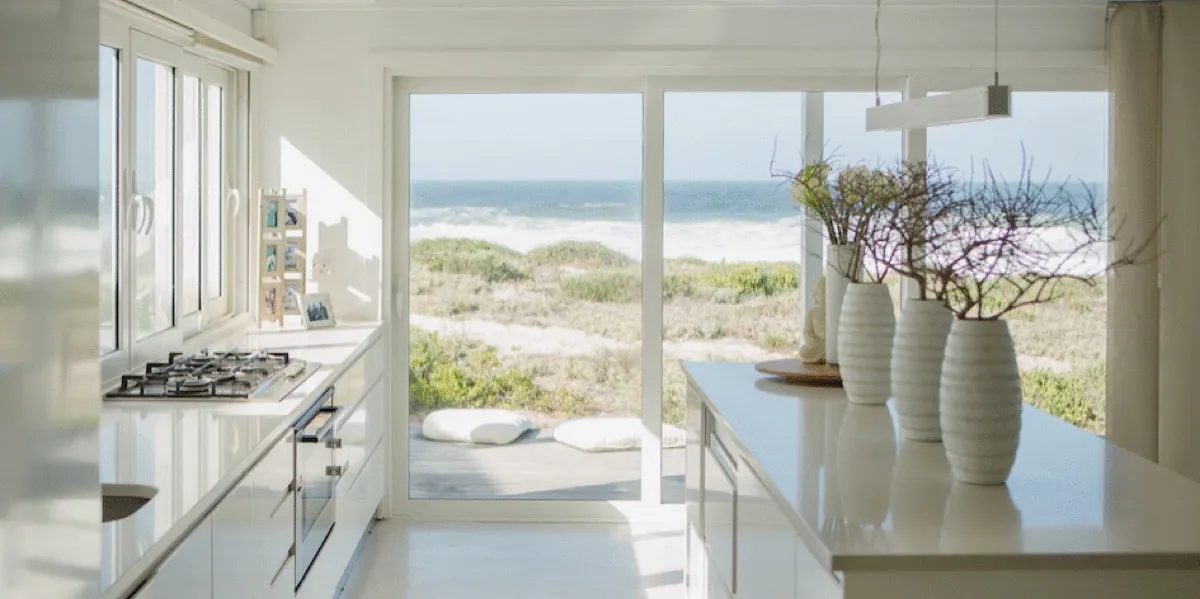
Adelaide’s beachside suburbs come with a specific and unforgiving set of environmental pressures. Salt spray, strong onshore winds, and near-constant moisture accelerate corrosion, work fittings and fixings loose over time, and wear down seals and cladding far faster than the same materials would last inland. Build without accounting for this exposure, and the cost shows up later as accelerating maintenance rather than upfront.
Materials that are actually built to handle it
Stainless steel and aluminium. Marine-grade 316 stainless steel is worth specifying for every exposed fastener and bracket — its corrosion resistance is genuinely a different league from standard fixings, and the price difference is small compared to the cost of replacing corroded fittings a few years in. Marine-grade aluminium performs well for window and door frames too, resisting pitting while still delivering a clean, contemporary look.
Façade systems. High-performance renders, UV-stable paint systems, salt-resistant fibre cement, and either treated timber (Class 1 durability as a minimum) or a properly sealed composite cladding all add a genuine layer of long-term protection against the coastal environment.
Windows and seals. Quality glazing systems — uPVC or thermally-broken aluminium frames paired with good-quality gaskets — keep both water and air infiltration under control, which matters even more in a location where wind-driven rain is a regular occurrence.
Design decisions that matter just as much as material choice
Orientation can meaningfully reduce wind exposure to the building while still capturing solar benefit through the cooler months. Low-pitch or hipped roofs generally outperform steep gables in high-wind conditions. Elevated foundations improve airflow underneath the building and reduce moisture intrusion at ground level, and salt-tolerant landscaping paired with corrosion-resistant fencing rounds out the protection for the property as a whole, not just the building envelope itself.
Navigating the approvals that come with coastal sites
Coastal builds often involve additional council overlays and, depending on the specific location, bushfire compliance codes layered on top of standard planning requirements. An experienced local builder treats this complexity as routine rather than something you need to untangle yourself — which is exactly the kind of local knowledge worth checking for before you commit to a builder for a coastal project.